Ever been in a meeting with a client where industry terms or acronyms are thrown around like parade confetti?
‘…the ACEO directed that each ATAR report be distributed to all members of the VRC team and be benchmarked against IR regulations…’
Well I have. It was for a meeting about Quantity Surveying and I’ll say no more on that subject matter – mostly because my notes look like a strange word sudoku.
While the world of brand and design is not so littered with convoluted acronyms (though it would be fun to make some up) it does use terms that can have you nodding away smiling, while underneath thinking ‘what the..?’.
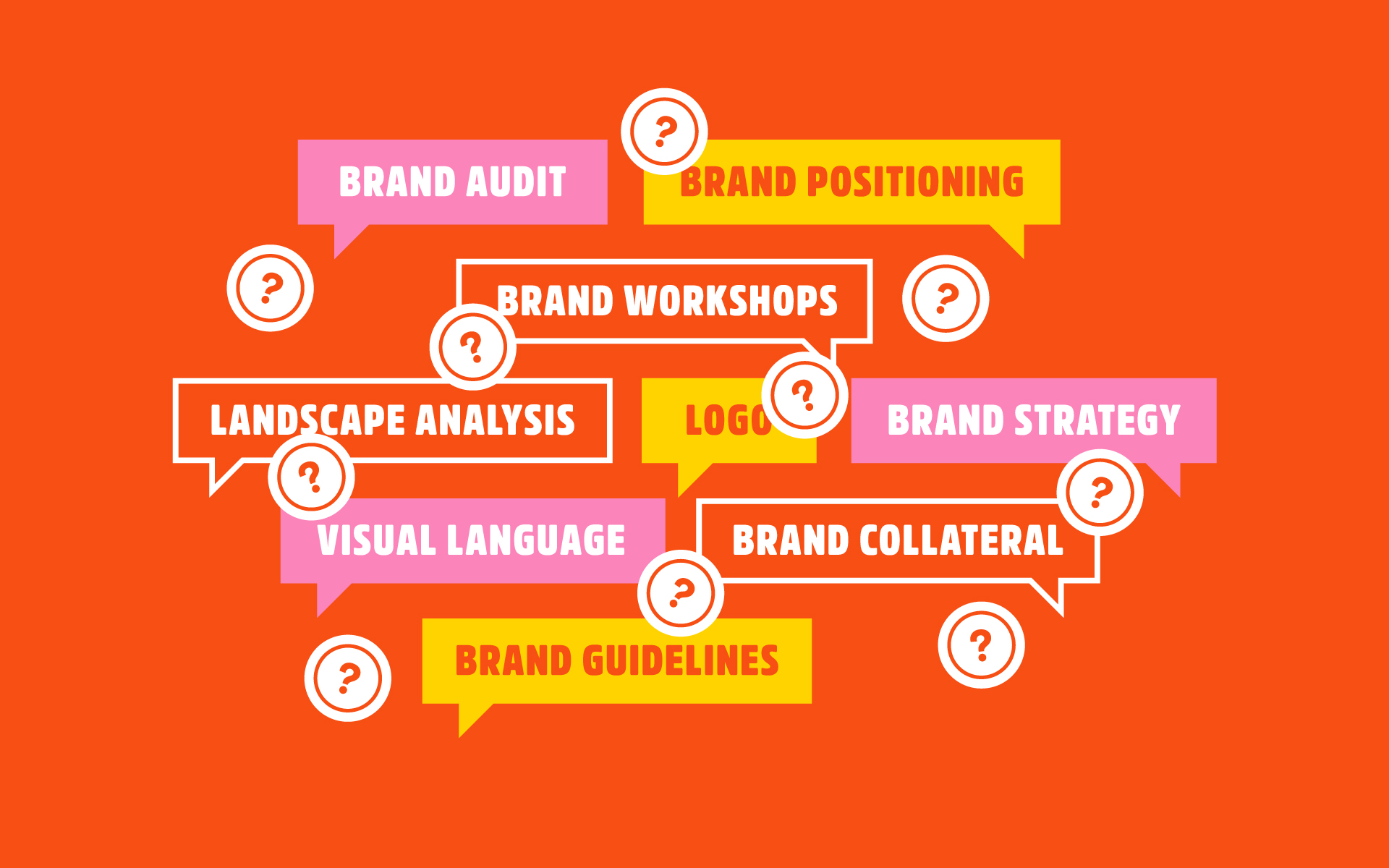
Part of our mission at Refresh Your Brand is to make brand accessible to everyone. And with that in mind, here is a cheat sheet of our most common brand services that explain the what and, importantly, the why.
Let’s go!…
Brand Audit
What is it?
A Brand Audit assembles elements of your current brand across three key areas:
- Internal brand (your purpose, vision, mission, values etc).
- External brand (your visual branding and tone of voice across all marketing material such as website, social media, printed flyers etc).
- Customer experience.
All research and visuals are collated into a single document and presented back to you with key insights and recommendations.
Why do it?
To determine the good, the bad and the ugly of your brand. To uncover any inconsistencies and to understand what is valuable (keep), what is not (toss) and where the opportunities lie to improve and strengthen your brand (explore).
Landscape Analysis
What is it?
It is information gathered about your competitors or other businesses just like yours. The analysis examines elements of their internal and external brands (as mentioned above) for consideration and comparison. How do they look and sound? What do they stand for? What is unique about them?
Why do it?
To be able to stand out from your competitors, you must first know what they stand for and how they look, sound, think, and behave.
Brand Workshops
What are they?
Brand workshops are planned sessions packed with a range of brand questions, exercises and activities involving the key people in your business. Depending on your needs and the size of your team, these vary in length and number.
Why do it?
Because we can’t simply tell you what your values are, or vision is — it must come from you. These workshops are key to establishing your brand personality and positioning.
Brand Positioning
What is it?
Establishing where your brand is positioned within your market (and in the minds of your customers) when it comes to influencing factors like, price, convenience, customer service, ethics, quality and so on.
Why do it?
A clear Brand Positioning helps set you apart from your competitors to fill a customer need.
Brand Strategy
What is it?
Strategy feels like one of those big (and vague) terms that gets thrown around a lot in brand discussions. In essence, a strategy is a plan.
It takes all the research and insights from the above steps (audit, landscape analysis, workshops) and provides a clear outline of:
- Your internal brand (purpose, vision, mission, values, promise); and
- Your external positioning (customer personal, personality, positioning, narrative, tone of voice).
It also proposes recommendations for your visual brand.
Why do it?
Information is only useful when we apply and use it in the right way. This strategy document is your foundation and roadmap for everything you do – to ensure all aspects of your brand are authentic, consistent and engaging.
Logo or Brandmark
What is it?
This is your primary visual mark by which people use to identify you. There are many types of logos – a logo can be a word or name only (wordmark), or a symbol (brandmark) or a hybrid of both. Together with your visual language, a logo forms part of your visual identity.
Why do it?
Your logo is perhaps your biggest, most widely used brand asset so it’s vital that it is unique, memorable and reflective of your brand.
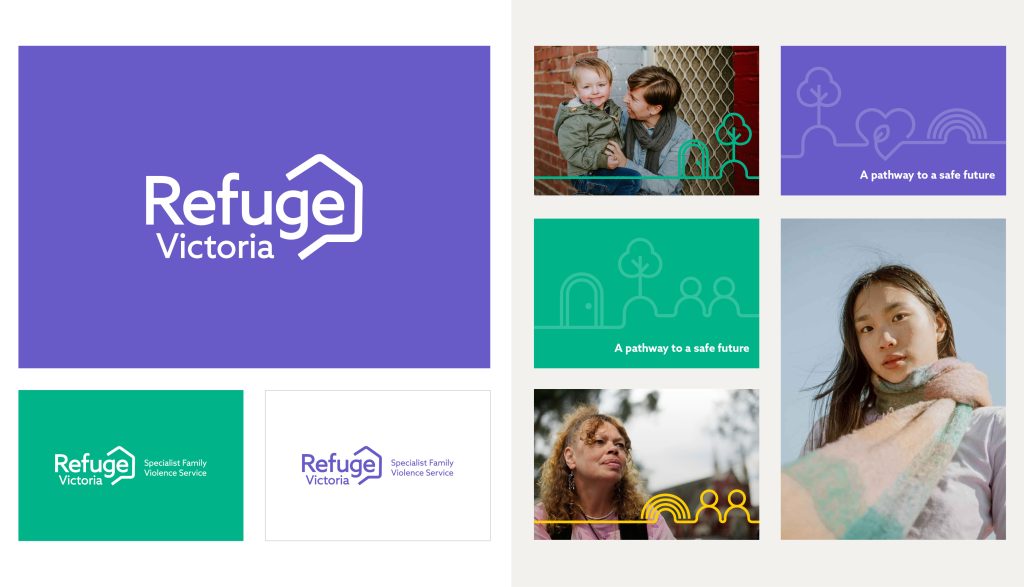
Examples of Logo and Visual Language: Refuge Victoria
Visual Language
What is it?
These are all of the visual elements that support your logo. Think patterns, photography style, graphics and illustration.
Why do it?
Because a logo in isolation just won’t cut it. Your visual language is a statement and expression of your brand personality. It reinforces what you stand for and who you want to engage.
Brand Guidelines
What is it?
A document showing how the new visual aspects of the brand should be used and applied across all relevant touchpoints of your business.
Why do it?
To maintain the integrity of this new brand you have worked so hard to build. Because at the end of every project, we hand you the reigns and it is up to you to steer.
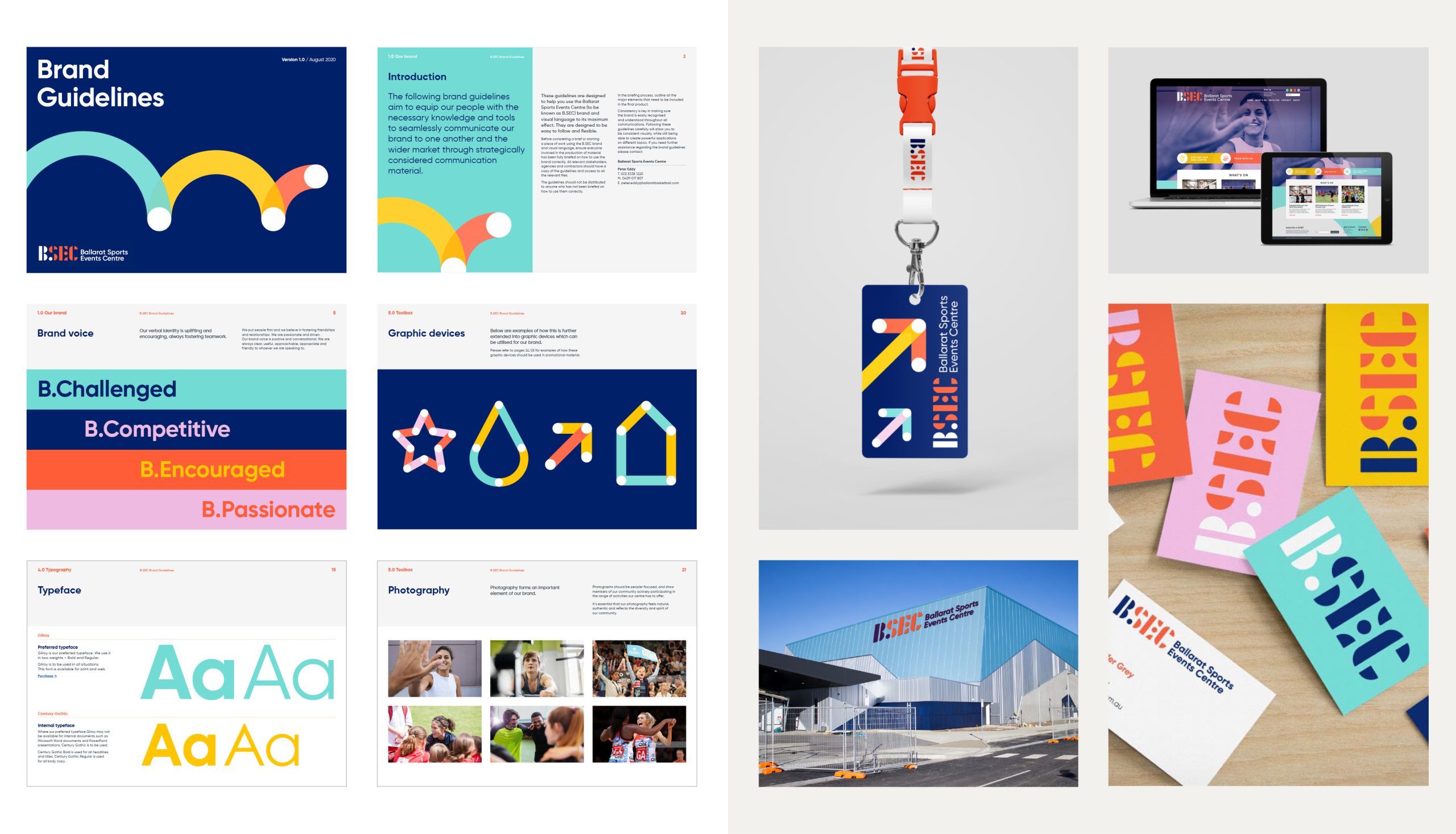
Examples of Brand Style Guide and Brand Collateral: Ballarat Sports and Events Centre
Brand Collateral
What is it?
This is all your branded touchpoints that your customer encounters from printed material like business cards, flyers and signage to digital assets like your website and social media templates.
Why do it?
Because what is the use of a beautiful brand if nobody knows it exists?
It’s completely reasonable for those who run a business not to be fluent in brand and the language surrounding it (read: quantity surveying).
Everyone is at a different stage of their brand journey. At one end are brands in their infancy who may need help establishing their identity and positioning. At the other end, are brands which may be more established but possibly lack consistency or which no longer resonate.
Wherever your brand sits on this spectrum, know that – as your business evolves and time rolls on – so too must your brand.
Want to review an aspect of your brand but not sure where to start?
Get in touch with us at https://refreshyourbrand.com.au/book-now/ for a free consultation.